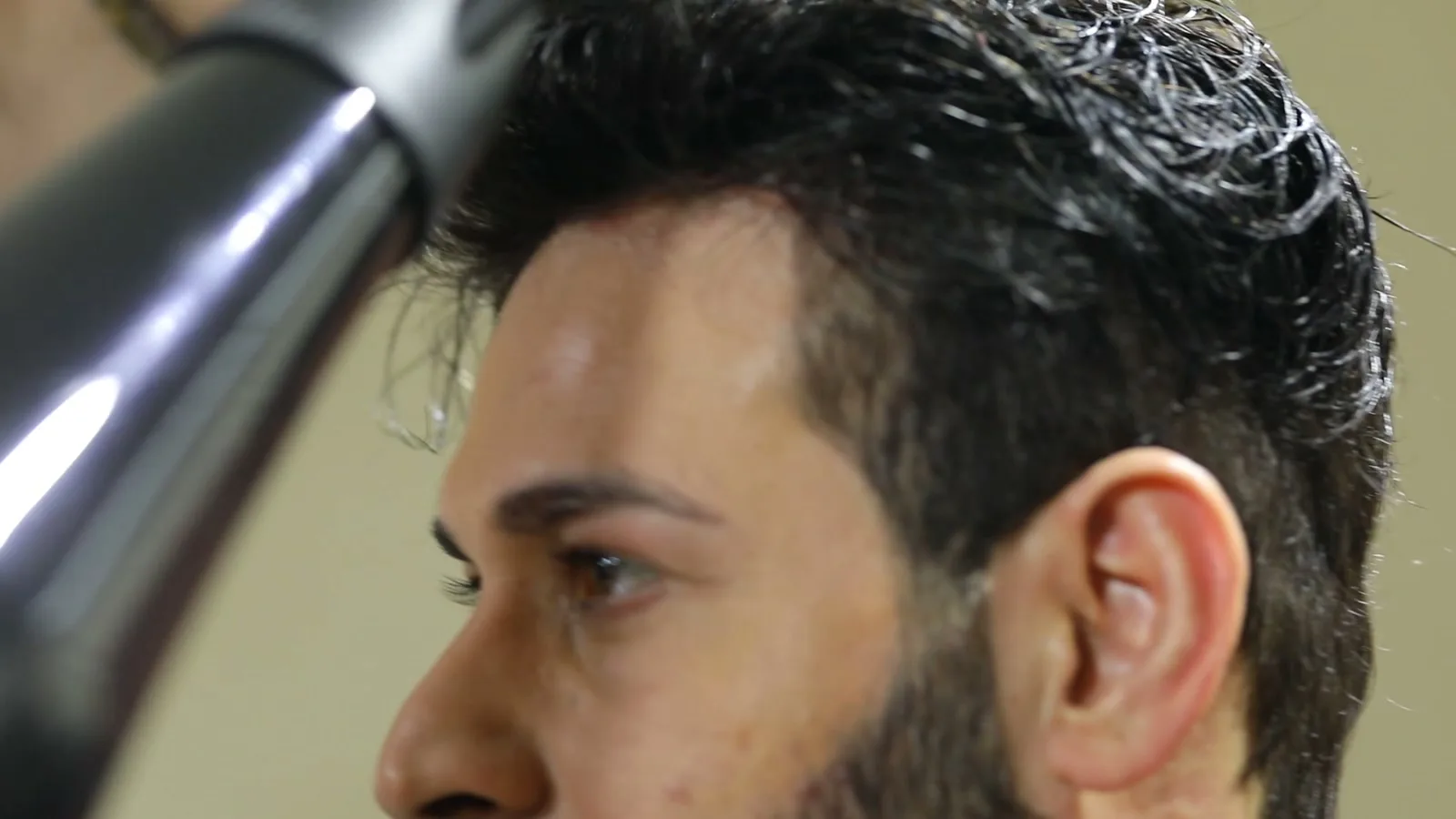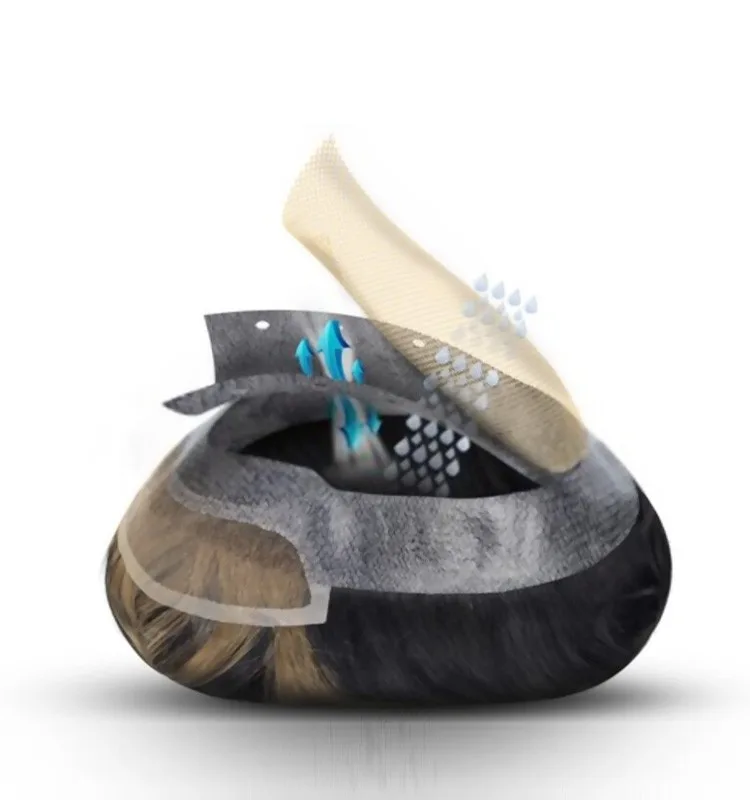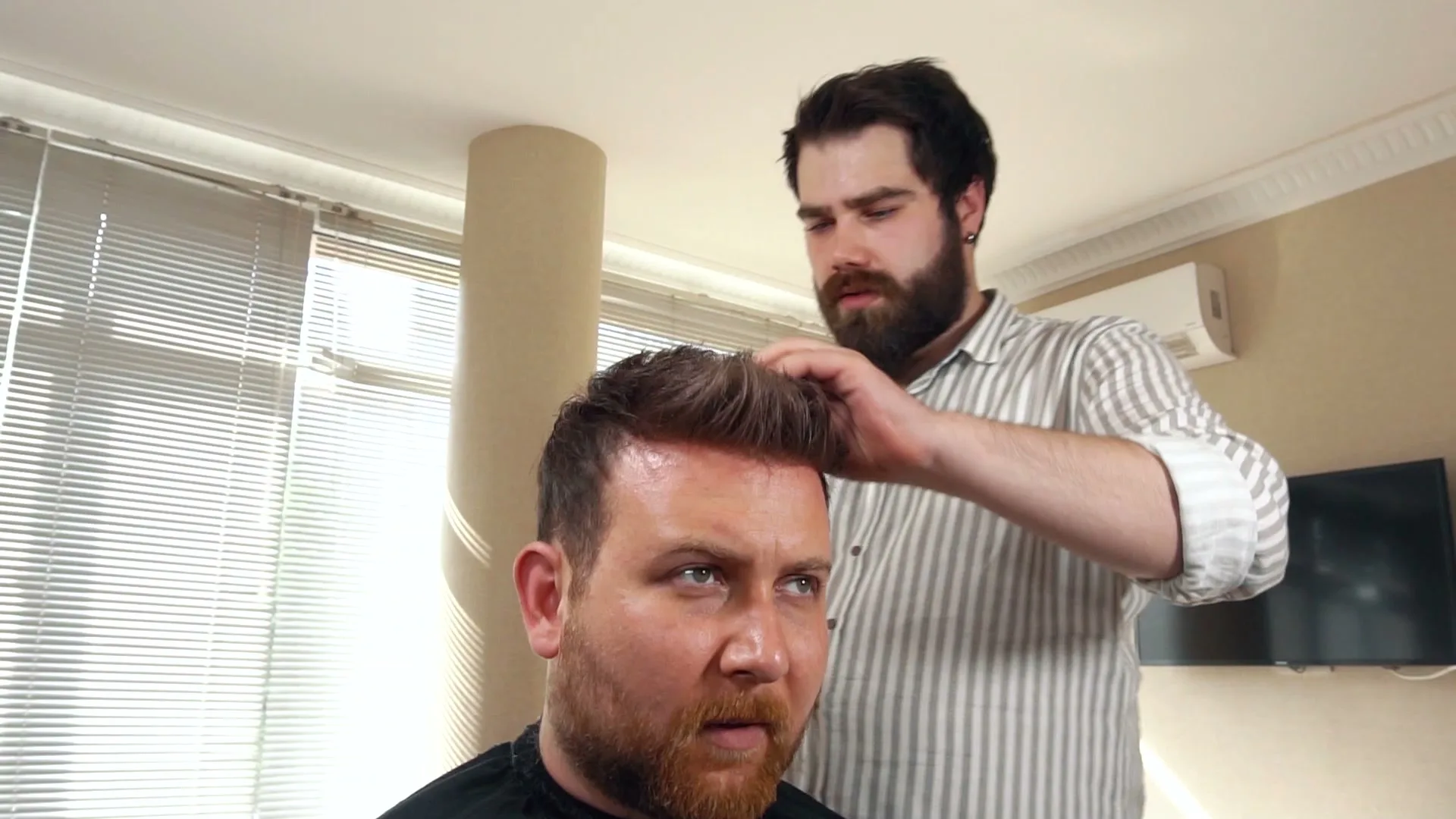





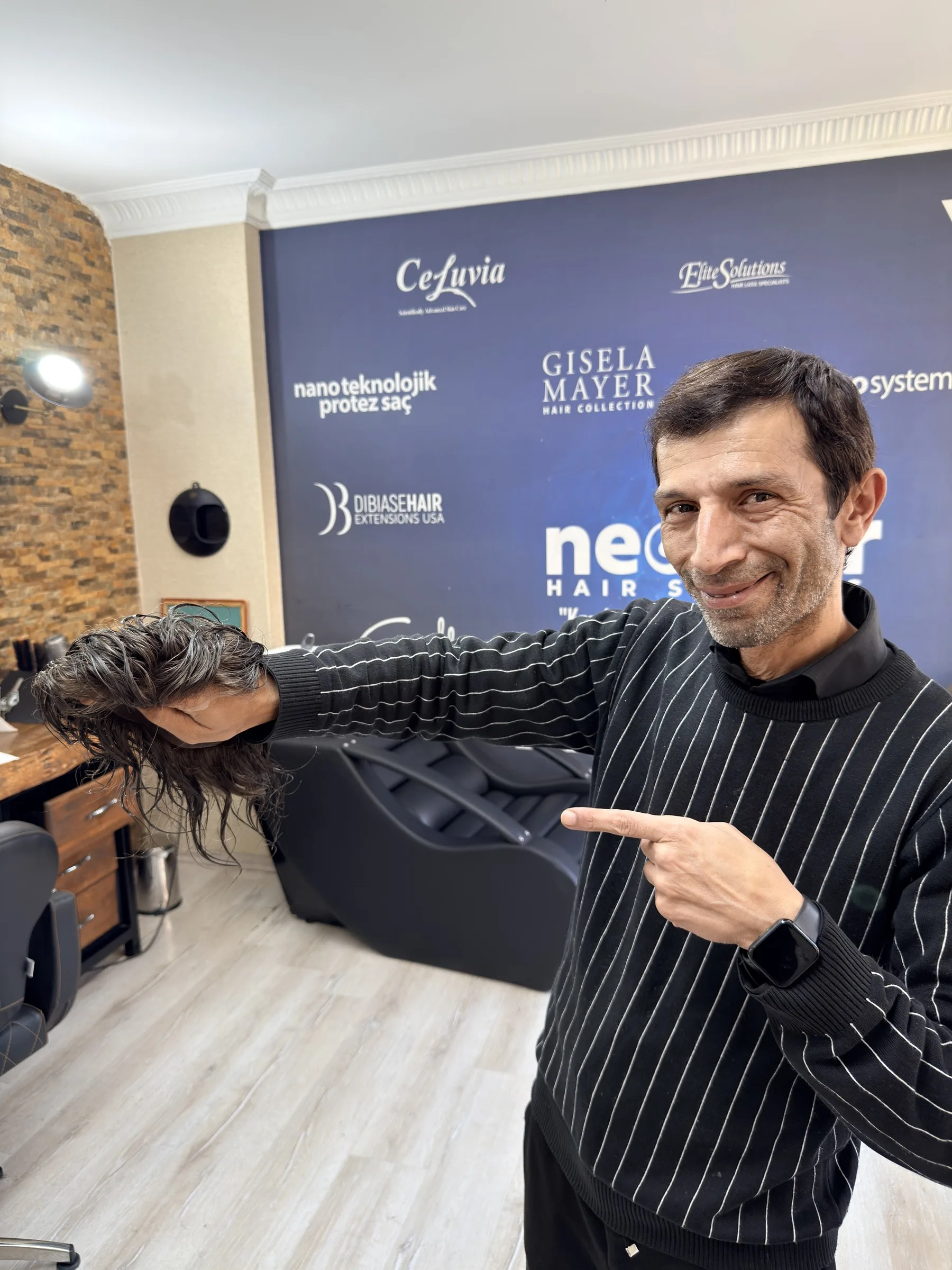
A hair system lasts roughly 6 months to 2 years. Where yours falls in that range depends mostly on the base: the thinnest, most invisible bases sit at the short end, and thicker skin and mono bases reach the long end. Sweat, climate and how the system is cleaned move the number further.
Two different lifespans often get mixed up. The system itself lasts months. The bond that holds it to your scalp lasts 2–5 weeks, after which the system is taken off, cleaned and attached again.
How long does a hair system last on each base type?
The rule is simple: the less material in a base, the better it hides and the sooner it wears out. A base that disappears against your skin has very little to it.
| Base type | Typical lifespan | How it looks | Durability |
|---|---|---|---|
| Swiss lace | 6–9 months | The most invisible hairline; scalp shows through naturally | Low: knots loosen and the mesh tears |
| French lace | 6–12 months | Very natural, slightly firmer than Swiss | Low to medium |
| Ultra-thin skin and nanotechnology bases (about 0.03–0.06 mm) | 6–12 months | Skin-like, no knots, edge almost invisible | Low to medium: the film stretches at the edges |
| Thin skin (0.08–0.12 mm) | 12–18 months | Natural at normal distance; edge easier to spot up close | Medium to high |
| Mono with a poly border | 12–24 months | Natural parting; front less fine without a lace front | High |
| Hybrid (lace front, skin perimeter) | 9–18 months | Lace realism where people look | Medium: the lace front usually wears first |
These ranges assume professional maintenance every 2–5 weeks and ordinary wear. Manufacturers quote different figures, and a very thin base worn through a hot summer with daily training can be finished well before six months. For how each base looks and feels in more detail, see how to choose a hair system base.
What wears out first on a hair system?
A system rarely fails all at once. It wears in a fairly predictable order.
Knots at the hairline
On lace and mono bases, each hair is tied on with a tiny knot. Washing, combing and friction loosen those knots slowly, and hair slips out. The front goes first, because the hairline uses the finest single-hair knots, and those knots are often bleached so they don't show as dots on the skin. Bleaching weakens them.
Base edges
The perimeter is where adhesive goes on and solvent takes it off, every few weeks. Thin bases stretch, curl and eventually tear there. Once an edge will not lie flat, fresh tape no longer makes the bond last.
Hair density
Hair on a system does not regrow, so every hair lost is gone. Density drops gradually over the months, fastest at the crown and the nape, where the pillow rubs every night. A system that looked full at fitting looks lighter by the end of its life. Replacement is often a density question before it is a damage question.
Colour and texture
Sun, chlorine and salt water oxidise hair colour. Dark brown turns warmer and slightly red; grey blends can turn yellow. System hair also gets no natural oil from the scalp, so it dries out faster than your own hair. A professional can tone it once or twice, but every chemical treatment shortens its life.
How often does a hair system need re-bonding?
Every 2–5 weeks. An oily scalp, heavy sweating or a hot climate pushes you towards two weeks. A dry scalp and an office job in a cool city can stretch it to four or five.
The bond does not fail because the adhesive is weak. It fails because your skin renews itself: the outer layer sheds all the time, and the adhesive is stuck to cells that are on their way off. Sweat and scalp oil work in under the edges at the same time, and any hair growing under the base pushes against it.
A maintenance visit usually covers:
- removing the system with a solvent, without pulling
- cleaning old adhesive off the base
- washing and conditioning the system's hair
- cleaning the scalp and shaving or clipping the bonding area
- re-bonding with fresh tape or adhesive
- trimming your own hair at the sides and back so it still blends
Between visits, wash the system once or twice a week with a sulphate-free shampoo, and keep conditioner on the lengths, away from the base. The day-to-day details are in our guide to daily life with a hair system.
Signs it is time to replace your hair system
- You can see the base through the hair at the front or crown in ordinary daylight.
- The edges are torn, or curl up even with fresh tape.
- The colour no longer matches the hair at your sides, even after toning.
- The hair feels like straw straight after conditioning and tangles at the nape.
- The bond fails within days, although your routine has not changed.
- The base has stretched and folds or wrinkles when it is positioned.
One of these alone can sometimes be fixed. Two or three together usually mean the system is finished.
Why keep a spare hair system?
A spare costs money up front and saves trouble later. There are three good reasons to have one.
- Accidents happen. A torn edge or a bad colour reaction should not leave you without hair while a replacement is made.
- Custom systems take time to make. If yours is made to order, order the next one before the current one is finished, not after.
- Rotation spreads the wear. Two systems worn in turn each spend half the time on your head, so each lasts longer in calendar months.
If you rotate, stagger the two. Start the second system a few months after the first, so you never move from a tired system straight to a brand-new one. That jump in density is the change people around you are most likely to notice.
For frequent travellers, and for anyone who lives far from a hair-system salon, a spare is close to essential.
How to make a hair system last longer
- Wash in lukewarm water, never hot, with a sulphate-free shampoo.
- Comb from the ends upwards, holding the hair near the base, and never comb hard while it is wet.
- Sleep on a silk or satin pillowcase to reduce friction at the nape.
- Rinse with fresh water straight after the pool or the sea.
- Keep heat tools on a low or medium setting.
- Never peel a system off without solvent.
- Keep to the maintenance schedule. An extra week on a lifting bond costs more base life than it saves in visits.
When you get a quote, ask for the base type to be written on it, so you know from the start which end of the lifespan range to expect. At Neo Hair, the free hair analysis starts with a few photos over WhatsApp, and we explain the trade-offs for your hair, your climate and your routine before you choose.